Frank: How was the performance for you today?
Lars: It was fun.
Udo: It was awesome!
Carsten: For the time (Note from the author: The band played second of four bands and started at 9:15 PM), the performance was really great! It was a lot of fun.
Frank: You have played very often at the Tommy-Weissbecker-Haus in Berlin. It fits 200 people. The atmosphere there is very direct. Today it was a larger hall. How is it for you to play in bigger clubs?
Lars: We prefer smaller stages; they excite us more and are more our thing. But here at SO36, it was really cool, especially since the stage isn’t that huge. The hall is big, but the stage isn’t enormous. That suits us better. For example, at “Resist to Exist,” the stage was really huge. That’s not really our thing.
Carsten: Although “Resist to Exist” is really awesome. We love playing there. But the smaller gigs are usually the more exciting ones.
Of course, playing here at SO36 is a special honor. When do you get to come here? And then to stand on this stage is really cool. Okay, it’s bigger than the Tommy-Weissbecker-Haus, but I thought the atmosphere was fantastic. Even at this time, having so many people there was really great!
Lars: The Tommy-Weissbecker-Haus has always been one of our favorite places. We checked and found that we have actually played in Berlin almost as often as in Trier. So generally in Berlin. Most of those were concerts at the Tommy-Weissbecker-Haus.
Frank: You mentioned the “Resist to Exist” festival. The “Resist to Exist” is a DIY festival. How important is it for you to play at such a festival?
Lars: Very important! On one hand, the festival is great, and on the other hand, I think it’s incredibly worth supporting. So many people put their energy and life’s blood into it. Therefore, it’s all the more important that people also get involved.
Carsten: Especially this festival...we have played there several times...for a DIY event, “Resist to Exist” is extremely professionally organized. When we first arrived there, I think it was in 2008, we were really surprised by how it was. It felt like a big festival, really professional. Everyone who worked there was super cool. Everything ran absolutely fair. Really...just top-notch!
Frank: Now I have a question for the new guy. What is your musical background? Did the band notice you or did you notice the band?
Udo: I’ve known the band for quite a while. In fact, I played for almost ten years with Carsten in the rock’n’roll band “The Dynaminds.” When they needed someone, he asked me if I wanted to join Popperklopper. I think I already pre-produced with the band on the penultimate album. Carsten and I spent many nights, even during the week, in the studio working on things. So it was only natural that Carsten asked me if I wanted to join, especially since I had been closely connected with the people for a while. Musically, I have to honestly say that I don’t come from the German punk scene, but rather from the rock and rock’n’roll area. But I feel really comfortable here!
Frank: On July 28, 2017, your new album “Wolle was Komme” was released. What do you want to convey with the album title?
Lars: A friend presented me with this phrase, “Wolle was Komme.” She was really excited about it. She saw the positive side of it. Basically, it was about her going through a serious illness. She read this phrase “Wolle was Komme” somewhere and adopted it for herself, wanting to live and see the future positively. When she told me the phrase, I immediately, as an old critic and pessimist, said that it could also be interpreted completely differently. When I heard the phrase, I immediately envisioned a crowd in Nuremberg shouting for Hitler or something. Like “Wolle was Komme”...eat what you get, or die.
Therefore, I actually found the phrase very cool because it is very ambiguous, and you can think a lot about what it means. Everyone can also put their own interpretation into it.
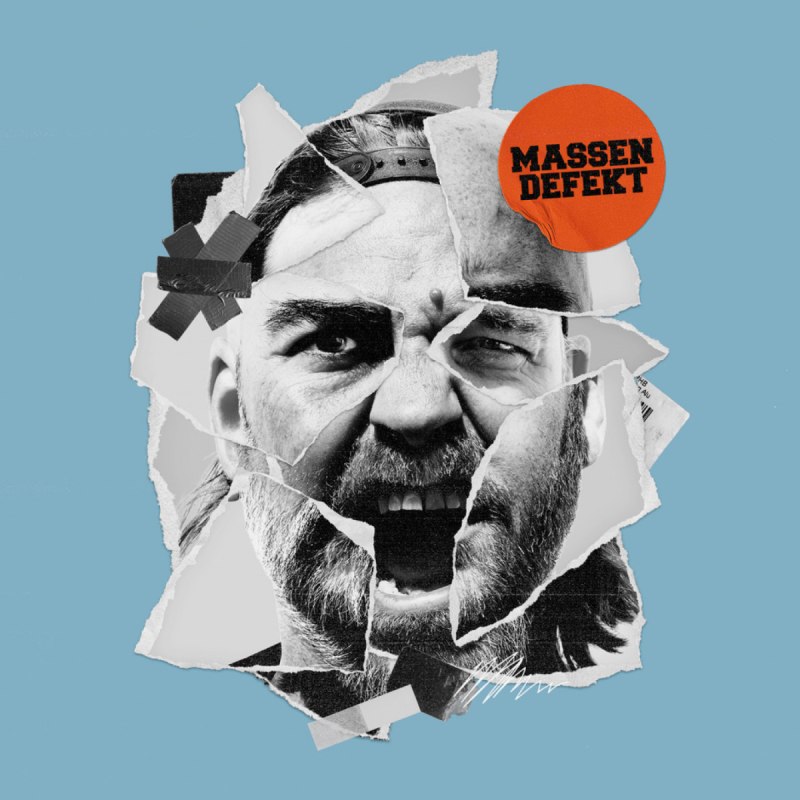
And then the idea with the face came. The grimace on the front cover. The grimace is meant to express the fear of the future.
So really “Wolle was Komme” or maybe not.
Udo: We originally had a different cover idea.
A crowd of people...at the time when many refugees were coming. For me, it had a more positive thought. So “Wolle was Komme,” meaning...just accept the situation and make the best of it!
Carsten: Exactly!
Especially in today’s time, where “fear of the future” is a big topic, with all the changes. You hear about fears everywhere. We want to express that with the title and the cover. The fear-filled grimace...what is coming my way? How will I cope with it? If “Wolle was Komme,” okay, I have to get through it somehow, into the future.
Frank: The first song on “Wolle was Komme” is called “Fairtrade, Fairkauft, Fairarscht.” With this song, you also criticize fair trade and organic food. Why do you do that?
Lars: It’s not a criticism of fair trade or organic food!
The song is meant to point out and encourage people to think, not to just consume everything just because it says fair trade or organic or something. People should just consider whether it can really all be true. You have to see the bigger picture! Fair trade is a great thing. But don’t just believe everything that is presented to you; think for yourself.
Carsten: Exactly!
So that’s a bit...when you quote a term like “fair trade,” it’s also a bit provocatively expressed. We’ve received some reactions like “Hey, what’s that crap?” or “How can you criticize something like that?!” It’s not a direct criticism of it. It’s just saying: You walk through the supermarket and see 100 products, and each product has some quality seal on it. You read it and think “Great!” because it says “fair trade,” and you think you have to buy it. Then you pick up another product, and there’s some other nice little star on it that suggests this product is the best. Every product is always the best! It’s not specifically about criticizing “fair trade” because it’s a good thing, but there are always things behind it. Things that the person walking through the supermarket doesn’t know, for example, that in the countries from which fair trade products come, not everything is okay. Exploitation still occurs in those countries. We want to make people think about what is written on the products and whether they should even grab it directly because everything is always the best? Everyone has the best product! Just question what the seal means. What do the statements on the product mean?
Frank: Is this more of a broad critique of consumption for you?
Carsten: Specifically in this song, it’s not about consumption criticism as such.
Okay, consumption is of course happening endlessly. We’re more about conscious shopping. Paying attention to how you walk through the store. Thinking about it. Not just buying things because they look good.
Frank: In Germany, many jobs have been created in recent years. You keep hearing that unemployment is very low. However, many of these jobs are poorly paid despite the minimum wage. Many people don’t even have the opportunity, even if they wanted to, to buy fair trade or organic products because they simply don’t have the money for it. What do you think can be done about that?
Lars: Generally, the big goal of any social state...should be the goal of any social state is that all people are doing well. You have to address various points. Wages play a big role in that. On the other hand, you also have to say that people’s awareness needs to change. There are certainly many people who don’t have much money. But that doesn’t mean I have to buy my schnitzel for 50 cents somewhere. That leads to animals being kept in ways that are simply unacceptable! Other people are also exploited for that. That’s the issue of “creating awareness.”
Carsten: That’s exactly the second topic. Exactly with the song!
This obsession with cheapness, the hunt for bargains, greed is good. Always these offers that are just a cent cheaper than the competition. What’s behind all that. This vicious cycle...
Of course, the consumer wants to have the cheapest. The discounter gets blamed for that. They say, “Well, okay, but people want the cheapest. The competition does it too.” Then the consumer comes and says, “I buy where it’s cheapest.” That’s where the problem arises! It gets taken to the extreme.
Udo: Also the fast-paced nature of the market.
I buy a cheap product, it breaks quickly, and then I can throw it away and buy a new one. But if I spend a little more money once, I’ll have it longer.
Lars: I think everyone can just pay attention to this within their means. Not always buy the cheapest product. Spend a little more money for a more durable product and then forgo something else. Then I can’t buy ten schnitzels but only five. It doesn’t have to be a schnitzel every day!
Carsten: I should also mention. I don’t know if it’s nationwide, this supermarket chain “Kaufland”...
Frank: ...there is one in Berlin too.
Carsten: That’s really, really terrible. On one hand, they are so cheap that a lot of people go there who don’t have the means to maybe go to “Edeka,” but it’s really crazy what’s going on there.
This obsession with cheapness!
And then this oversupply... It’s really disgusting!
Lars: Exactly, it’s just like: Why do I have to eat some southern fruits in winter? That didn’t exist before!
And only nowadays, when everything is cheap and still getting cheaper, do I absolutely need my southern fruits in winter. What all that means, looking at it globally. For the people in those countries, for the climate, just in general. That doesn’t have to be!
Everyone always wants the best and the prettiest. But maybe we should just think a little and also forgo something ourselves.
Udo: Just today, I read a statistic.
Every year, nine million people die earlier due to environmental influences.
Frank: In the song “Der Kapitalismus ist schuld,” you sing that capitalism is to blame for how we are. How is a change of the system possible when most people, despite everything, do not leave their hamster wheel?